

Expertise as an Aesthetic: Why Craft is the New Counter-Culture
- TJ Ashcraft
- Jan 15
- 4 min read
Updated: Mar 6

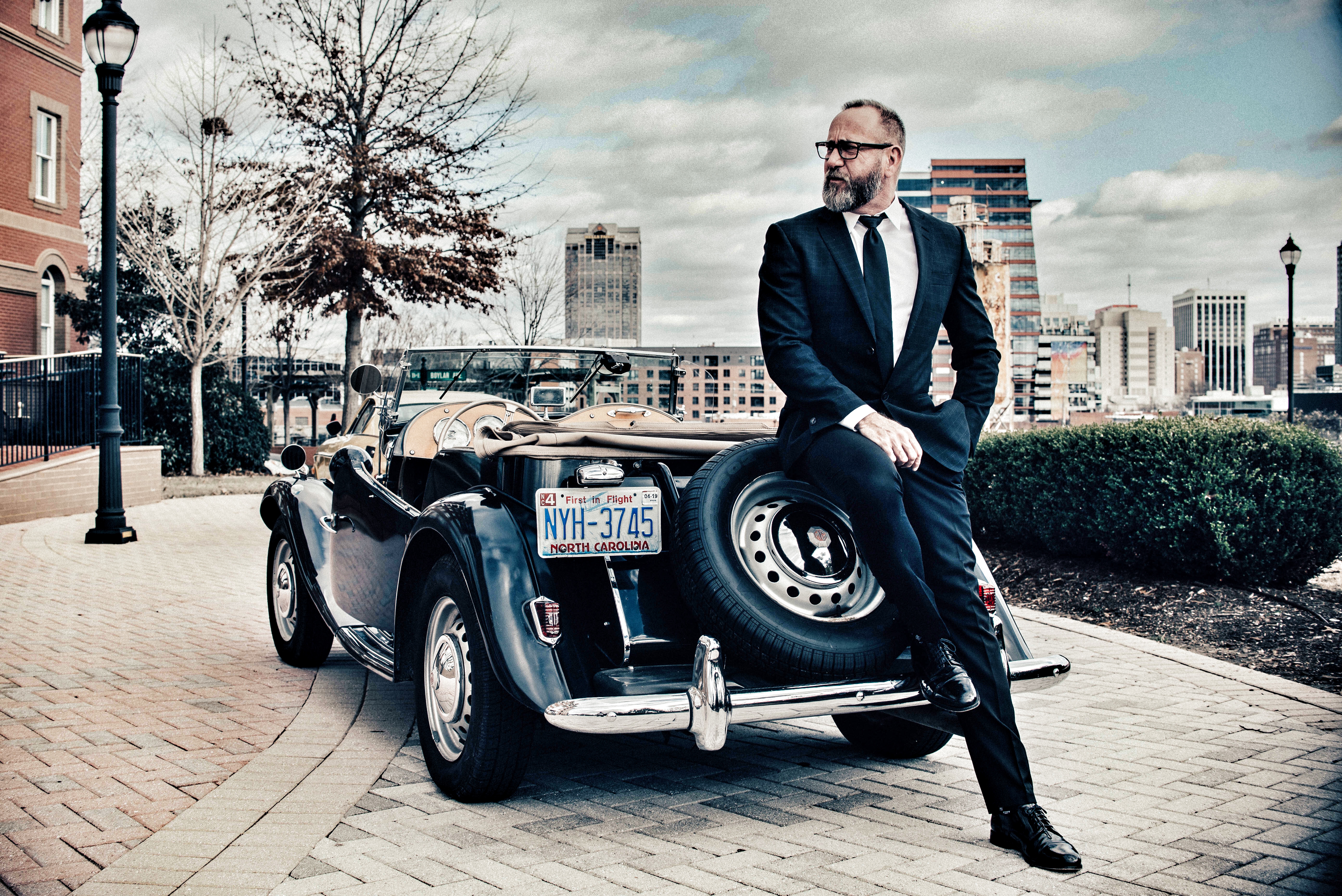
We have reached a point where expertise is no longer a destination; it is an aesthetic.
That sentence is worth sitting with — because it isn't hyperbole, and it isn't cynicism. It's a description of something measurable: the gap between the performance of knowledge and the substance of it has become wide enough, and common enough, that most of us have learned to navigate by surface rather than by depth. We've been trained to read authority by its costume.
The costume has a recognizable look. Confident typography. Carefully curated visual context. Jargon deployed at the right density — enough to signal insider access, not so much as to demand scrutiny. A credential in the bio that establishes legitimacy before the argument begins. A production quality that signals resources, and resources that signal trust.
None of these things are inherently dishonest. But none of them are evidence, either.
The Broken Proxy
The mechanism underneath this is old and well-documented. Our brains are pattern-recognition machines operating under resource constraints, and one of the most reliable patterns we've learned is that polished, confident presentation tends to correlate with competence. For most of human history, that heuristic worked reasonably well — the effort required to produce authoritative-looking communication served as a rough proxy for the expertise required to deserve it.
That proxy has broken down.
The production cost of looking authoritative has collapsed. With the right tools, the right templates, and a working knowledge of what "credible" looks like in a given context, the surface of expertise is now accessible to anyone — regardless of whether the substance behind it exists. What used to be a signal has become a style. And a style, by definition, can be applied.
This is not primarily a technology story, though technology has accelerated it. It's a visual literacy story: we haven't updated our reading skills to match the new production environment. We're still using heuristics calibrated for a world where the costume was harder to manufacture.
The Handprint
What gets lost when we lose the ability to distinguish the costume from the craft is something I've come to think of as the handprint.
The handprint is the evidence of human labor, specific intent, and accumulated knowledge embedded in a piece of work.
It's the thing that can't be generated without the experience that produced it — the decision visible only to someone who has stood at that particular crossroads, the constraint navigated in a way that reveals familiarity with the terrain, the error made and corrected and made again differently.
Imposter expertise is characterized precisely by the absence of handprints. It is smooth where real work is textured. It is confident in ways that don't account for the difficulty of the problem. It produces answers at a speed that suggests the questions were never seriously considered.
This is not always easy to see. The handprint is often subtle — a quality of specificity, a willingness to acknowledge what isn't known, an argument that earns its conclusion rather than asserting it. But it is visible, once you know what you're looking for. And learning to look for it is, in essence, what visual literacy in this domain means.
What AI Changes
There's a further complication worth naming, because it changes how we should think about this problem.
AI has entered the studio. And one of the things it does with remarkable fluency is generate the surface features of expertise: the confident tone, the structured argument, the plausible citation, the production quality. This doesn't make AI-assisted work inherently fraudulent — used well, these tools can amplify genuine thinking and accelerate legitimate inquiry. But it does mean that the production-cost proxy has collapsed even further, and the handprint has become correspondingly more important.
If AI makes finish cheap, then the differentiator is no longer the quality of the output at the moment of presentation. The differentiator is the integrity of the process that produced it — the judgment applied in shaping the prompt, the critical thinking brought to evaluating the result, the experience required to know when the generated answer is wrong in ways that aren't obvious.
In other words: the terrain rewards craft more, not less, when the costume becomes easy to manufacture.
Craft as Resistance
Craft, in this context, is a form of resistance. Not in a romantic sense — not as a rejection of new tools or a defense of old hierarchies. But as a practical commitment: to show the work, to value the process, to refuse the shortcut of looking right as a substitute for being grounded.
Choosing craft means making the handprint visible. It means being willing to show the iteration, the constraint-navigation, the failure that preceded the current version. It means treating process not as a liability to be hidden but as evidence to be offered.
This is harder than it sounds, because the incentive structures of most platforms run in the opposite direction. Polish is rewarded. Process is ignored. The last frame gets the attention; the distance traveled to reach it is invisible. Visual literacy means learning to read against those incentives — to ask for the handprint when the costume is all that's being offered.
Terrain Lens: Reading the Handprint |
Before you trust a source, accept a recommendation, or share someone's expertise — try this: |
1. What is this asking me to feel before I think? |
2. Can I see evidence of process — iteration, constraint, revision, specific decision-making? |
3. Is the confidence proportionate to the difficulty of the problem? |
4. What would this look like at an earlier stage — and does any of that history exist? |
5. Is the expertise being demonstrated — or performed? |
6. Is this inviting understanding — or offering permission to stop thinking? |
7. Who benefits if I mistake the costume for the craft? |
When you look at a project, a recommendation, or a piece of advice today — can you see the labor behind it? Or are you reading the gloss?


Comments